
Skip to content

Why Do Coupon Codes Expire? (And How to Check if a Code Still Works)

You find the perfect item, add it to your cart, and go hunting for a discount code. You paste it in. Nothing happens. Or worse, it works for five seconds and then the checkout page quietly removes it before you hit “place order.”

If that sounds familiar, you are not imagining things and you are definitely not alone. Recent industry research shows that 35% of U.S. online shoppers who used a promo code in the past two months ran into a code that either didn’t work at all or gave a smaller discount than advertised. More than half of shoppers say they’ve paid full price for something, only to stumble across a working code minutes or hours later. It’s one of the more common small frustrations of online shopping, right up there with surprise shipping fees and forgotten passwords.

This guide breaks down exactly why coupon codes expire in the first place, what’s actually happening behind the scenes when a code fails, and how to check whether a code is still valid before you waste time typing it in at checkout.

Why Do Coupon Codes Expire in the First Place?

Coupon codes aren’t set to expire just to annoy you, even though it can feel that way. Retailers and manufacturers build expiration dates into almost every promotion for practical, business-driven reasons. Here’s what’s actually going on.

1. Retailers Need to Create a Sense of Urgency

This is the one most people already suspect, and it’s true. A coupon that never expires doesn’t push anyone to buy today. A coupon that expires Sunday night does. Limited windows are a basic marketing tool, and they work, which is exactly why almost every promo code you see comes with a countdown attached, whether that’s a specific date or a vague “limited time only.”

2. Open-Ended Discounts Are a Financial Liability

From an accounting standpoint, an active coupon is essentially a promise to lose money on a future sale. If a brand issued a code with no end date, that liability would sit on the books indefinitely. Expiration dates let a company close out a promotion cleanly, know exactly what it cost, and move on to planning the next one. This is a big part of why manufacturer coupons in particular are almost always dated, since manufacturers have to reimburse retailers for every coupon redeemed.

3. Codes Are Tied to Specific Inventory or Campaigns

A “buy one, get one” code or a seasonal discount is usually built around a specific batch of stock or a specific marketing push. Once that inventory sells through or the campaign ends, the code stops making sense to honor. Keeping it live would mean applying a discount that was never meant to outlast the promotion it was built for.

4. Pricing and Margins Change

Costs shift. Supplier prices move. A discount that made sense in March might eat into margin too heavily by August. Expiration dates give retailers room to reprice or retire a deal before it becomes unprofitable.

5. Single Use and Limited Redemption Codes

Some codes aren’t really “expired” in the traditional sense. They’re built to work only once, or only for a capped number of total redemptions. Once that cap is hit, the code effectively dies, even if the calendar date on it hasn’t passed yet. This is common with influencer and affiliate codes, which brands often issue with a maximum number of uses baked into the backend.

6. Fraud and Abuse Prevention

Codes that stay active forever are also easier to abuse. Expiration windows, usage caps, and one-per-customer rules all help retailers limit the damage from coupon stacking, bots, and resellers who scrape codes and try to bulk-redeem them.

The Different Types of Coupon Codes (and Why They Expire Differently)

Not all coupon codes are built the same way, and understanding the type of code you’re dealing with can explain a lot about why it stopped working.

Sitewide Promo Codes

These are the broad, marketing-driven codes you see plastered across a homepage banner or a big email blast, like “20% off everything.” They tend to run for a fixed campaign window, often tied to a holiday, product launch, or slow sales period, and they expire the moment that campaign wraps up.

Manufacturer Coupons

These come directly from the brand that makes the product rather than the store selling it. Because the manufacturer has to reimburse the retailer for every redemption, these codes are usually the most strictly enforced. There’s rarely any flexibility once the expiration date passes, since the retailer has no incentive to honor a discount it won’t get reimbursed for.

Influencer and Affiliate Codes

These are the codes you hear read aloud in a podcast ad or see pinned in a creator’s video description. Brands typically allocate a specific budget or a capped number of redemptions to each creator partnership. Once that budget or cap is hit, the code stops working, even though the video or post promoting it stays online indefinitely. This mismatch is one of the biggest reasons people run into dead influencer codes long after they were first shared, and it’s a pattern that has only become more common as creator marketing budgets get spread across more partnerships.

Loyalty and Account-Based Codes

Some codes are generated specifically for your account, based on purchase history, cart abandonment, or loyalty program status. These are single use by design and will always fail for anyone else who tries to use them, regardless of the listed expiration date.

Flash Sale and Clearance Codes

Tied directly to a specific window, often just hours or a couple of days, these codes are meant to move inventory quickly. They tend to have the shortest shelf life of any code type, and they’re the most likely to be gone by the time you find them shared secondhand on social media or a coupon aggregator site.

What Actually Happens When a Coupon Code “Doesn’t Work”

Not every failed code is truly expired. In practice, there are several different reasons a code might get rejected at checkout, and they’re worth telling apart because the fix is different for each one.

  • The code has genuinely expired. The promotion window closed and the system now rejects it automatically.
  • It’s already been redeemed the maximum number of times. Either by you, or the code hit its overall usage cap.
  • It’s region or currency locked. A code built for the UK site won’t always work on the US version of the same store.
  • It requires a minimum order value you haven’t hit yet. Add another item and it may suddenly apply.
  • It excludes certain categories or already-discounted items. Sale items, gift cards, and clearance sections are commonly excluded.
  • It’s for new customers only. Returning shoppers often get quietly blocked from “welcome” style codes.
  • It’s a session or cart timing issue. Some shoppers report a code that appears to apply, then disappears right before the order finalizes. This is usually a backend validation check running a second time at final checkout.

According to recent survey data, hidden restrictions like these hit younger shoppers hardest, with 18 to 24 year olds experiencing them at notably higher rates than shoppers over 65. That’s likely a reflection of who is doing the most active code hunting online in the first place.

The Coupon Code Ecosystem Has Changed a Lot Recently

Coupon codes used to be something you stumbled across in an email newsletter or a magazine insert. That’s not really how most people find them anymore.

The current picture looks something like this:

  • The large majority of American online shoppers now actively search for a promo code before completing a purchase, rather than checking out at the listed price.
  • Automatic coupon browser extensions have become mainstream. Roughly half of U.S. consumers now have some kind of tool running in the background of their browser that automatically tests codes at checkout, which is more people than rely on retailer emails for deals.
  • Social media has become a major discovery channel, and for younger shoppers it’s the primary one, ahead of email, search, and dedicated coupon sites combined.
  • Influencer promo codes, the kind you hear in a podcast ad or see in a creator’s video caption, have become extremely common, but they’re also becoming less reliable. Brands frequently cap redemptions or quietly retire creator codes once a campaign budget runs out, even while the video promoting the code stays live indefinitely.

That last point matters more than people realize. A video or blog post promoting a code doesn’t get deleted just because the code expired. That’s part of why the internet is full of outdated codes long after they’ve stopped working.

There’s also a generational split worth noting. Older shoppers tend to still favor email newsletters as their main way of discovering deals, while younger shoppers have shifted almost entirely toward social platforms and short-form video. That shift changes how quickly a code spreads, and also how quickly it goes stale. A code shared in a newsletter typically reaches its audience within days and the email eventually stops circulating. A code shared in a viral video or post can keep getting discovered by new viewers for months, long after the original promotion ended, which is part of why social media has become such a common source of expired codes.

Why the Internet Is Full of Expired Codes

If you’ve ever wondered why a coupon aggregator site shows twenty codes and only one or two actually work, there’s a straightforward explanation. Some coupon sites benefit from listing a large volume of codes, expired or not, because it signals to search engines and to visitors that the site is active and comprehensive. A page with ten expired codes and one working one can still drive more traffic than a page with just the single valid code, simply because it ranks for more search terms.

It’s not necessarily malicious. It’s often just outdated content that never got cleaned up, sitting on a page that Google still ranks because the domain has authority. Either way, the practical result is the same for you as a shopper: you can’t assume a code works just because it’s listed on page one of a search result.

How to Check if a Coupon Code Still Works

Before you copy and paste a random code and hope for the best, a few quick habits can save you a lot of wasted clicks.

1. Check the Listed Expiration Date First

This sounds obvious, but a surprising number of failed attempts come down to simply not noticing the code expired days or weeks ago. Reputable coupon sites list an expiration or “last verified” date next to each code. If that date has passed, or if there’s no date listed at all, treat the code with suspicion.

2. Look for a “Last Verified” or “Works” Confirmation

Some coupon platforms now rely on real shoppers testing codes in real time, rather than just scraping and listing every code they can find. If a site shows recent user confirmations, success rates, or a “verified today” style tag, that’s a much stronger signal than a static list with no freshness indicators.

3. Read the Fine Print, Not Just the Discount Percentage

Before assuming a code is broken, check for:

  • A minimum spend requirement
  • Category exclusions (sale items, gift cards, certain brands)
  • New customer only restrictions
  • Regional or currency limitations
  • One use per account or per household limits

A code that “doesn’t work” often just needs one more item in the cart, or applies to a different section of the site than the one you’re shopping in.

4. Try a Coupon Browser Extension

Rather than manually testing codes one at a time, browser extensions can test an entire database of codes for a retailer automatically at checkout and apply whichever one gives you the best discount. This has become one of the most common ways shoppers find working codes in 2026, and it removes most of the trial and error. Popular tools in this category test dozens of codes in the background and only apply one if it actually reduces your total.

5. Check Multiple Sources Before Giving Up

No single coupon site has every working code for every retailer. Cross-checking two or three sources, or letting a browser extension do that cross-checking for you, meaningfully improves your odds compared to relying on one listing.

6. Time Your Shopping Around Seasonal Patterns

Coupon reliability isn’t flat across the year. Industry tracking shows that promo code success rates dip noticeably in late winter, particularly February and March, as holiday promotions wind down and new spring campaigns haven’t fully launched yet. Reliability tends to climb through the summer months and peaks in the fall. If you have flexibility on timing, shopping outside the post-holiday lull can improve your odds of finding a code that actually works.

7. Contact Customer Service if the Code Should Still Be Valid

If you have a code from a source you trust, like a direct email from the retailer, and it’s still failing before the stated expiration date, it’s reasonable to reach out to customer support. Retailers will sometimes honor a code manually or issue a comparable discount if there was a technical glitch on their end.

What to Do When a Coupon Code Has Actually Expired

Finding out a code is genuinely dead doesn’t have to mean paying full price. A few options are worth trying first.

  • Ask politely. Store coupons, as opposed to manufacturer coupons, are sometimes accepted by staff or customer service reps shortly after expiration, particularly if you ask directly rather than assuming it’s a lost cause.
  • Sign up for the newsletter. Many retailers issue a fresh welcome discount the moment you subscribe, which can replace an expired code entirely.
  • Check for a sitewide sale instead. Sometimes a store swaps an expired code for a broader sale that offers a similar or better discount without needing a code at all.
  • Wait a few days if you’re not in a rush. New codes are issued constantly, and a similar or better discount often appears within a short window, especially around common promotional periods.
  • Abandon the cart, but don’t delete the browser tab. Retailers frequently email an incentive to shoppers who leave items sitting in a cart, sometimes including a fresh discount code to bring you back.


A Word of Caution: Not Every “Coupon” Is Legitimate

As coupon hunting has become more automated and more social, it has also attracted a small but real amount of scam activity. A few things are worth watching for:

  • Codes that ask for unnecessary personal information. A legitimate coupon code should apply at checkout without requiring you to enter sensitive details like a full Social Security number or banking login on a third-party page.
  • Browser extensions with vague or excessive permissions. Before installing any coupon or cashback extension, it’s worth checking what data it collects and how it’s used. Reputable extensions are generally upfront about this in their privacy policy and Chrome Web Store or Firefox Add-ons listing.
  • Too-good-to-be-true discounts shared via unsolicited text or direct message. Scammers sometimes use the promise of a huge discount code as bait to get you to click a phishing link. If a “coupon” arrives from an unexpected source and pushes you to act immediately, treat it with extra skepticism.
  • Sites that require payment to “unlock” a coupon code. Legitimate coupon codes are free. Any site charging a fee to reveal a code is a red flag.

None of this means coupon hunting is risky by default, most of it is completely routine and safe. It just helps to apply the same basic caution you would with any other online offer.

A Quick Reference: Common Reasons Codes Fail

Reason Code Fails What It Usually Means What You Can Try
Past expiration date Promotion window has closed Search for a newer, active code
Usage limit reached Code hit its total redemption cap Look for an alternate code from the same brand
Minimum spend not met Cart total is below the required threshold Add an item or check for a lower-threshold code
Excluded items in cart Sale or clearance items often don’t qualify Check the code’s terms for exclusions
New customer only Returning shoppers are blocked Check newsletter signup for a returning customer offer
Region or currency mismatch Code built for a different country’s storefront Confirm you’re on the correct regional site

Are Coupon Codes Still Worth the Effort?

Given how often codes fail, it’s fair to wonder whether hunting for one is worth the time. The data suggests most shoppers still think so. A majority of U.S. online shoppers report using a coupon code in the last two months, and more than half say they’ve switched to a different retailer specifically because a competitor had a working code available. Coupon use hasn’t slowed down, it’s just become more automated, with extensions and verified code databases doing a lot of the legwork that used to require manually searching multiple sites.

The most common reaction to a failed code isn’t giving up either. Most shoppers who hit a dead code simply go ahead and buy at full price anyway, while a smaller share abandon the purchase entirely. Either way, a few extra minutes spent checking a code’s terms and freshness before checkout can be the difference between one of those outcomes and actually getting the discount you were hoping for.

Frequently Asked Questions

Why do coupon codes expire so quickly?

Most codes are tied to a specific marketing campaign, budget, or inventory window. Once that campaign ends or the allocated discount budget runs out, retailers typically deactivate the code rather than let it run indefinitely, since an open-ended discount represents an ongoing cost.

Can a coupon code work after its expiration date?

Occasionally, yes. Some systems don’t deactivate a code until the very end of the expiration day, so a code listed as expiring “today” may still work until midnight local time. In rare cases, a retailer’s system may also have a delay in updating, though this isn’t something to count on.

Why do coupon sites list so many expired codes?

Coupon aggregator sites often keep expired codes listed because they still drive search traffic, and cleaning out old listings takes ongoing effort. Some sites also list unverified codes scraped from other sources without confirming whether they’re currently active, which is part of why cross-checking multiple sources or using a verified-code site tends to work better.

Is it illegal to use an expired coupon code?

No, trying an expired code isn’t illegal. It simply won’t be accepted by the retailer’s system. The only real risk is wasted time, not any legal consequence.

Do browser extensions that auto-apply coupons actually work?

Many shoppers find them genuinely useful, since these tools test a database of codes automatically at checkout rather than requiring manual entry. Results vary by retailer and by which extension you use, and it’s worth reading an extension’s privacy practices before installing it, since it will have visibility into your checkout activity.

Why did my coupon code apply and then disappear at checkout?

This is usually caused by a second validation check that runs right before an order finalizes, which can catch issues like a code hitting its usage cap in the seconds between when you entered it and when you completed the purchase. It can also happen if your cart contents changed slightly, such as an item going out of stock.

Are manufacturer coupons and store coupons treated differently when it comes to expiration?

Yes. Manufacturer coupons are almost always strictly enforced because the manufacturer reimburses the retailer for each redemption, leaving little flexibility. Store coupons, since they’re issued and controlled entirely by the retailer, are sometimes honored slightly past their expiration date at a staff member’s discretion.

The Bottom Line

Coupon codes expire because businesses need to control costs, manage inventory, and create a reason for you to buy now rather than later. That’s not going to change. What has changed is how much easier it’s become to check whether a code is actually still valid before you rely on it, whether that’s through a browser extension that tests codes automatically, a coupon site that shows real-time verification, or simply reading the fine print before assuming a code is broken.

A little bit of checking goes a long way. The next time a code fails at checkout, it’s worth pausing before you either give up or pay full price, since there’s a decent chance the fix is as simple as adding one more item to your cart or finding a code that was verified more recently.

The Smart Shopper’s Guide to Finding Verified Deals in 2026

Online shopping in 2026 looks nothing like it did even three or four years ago. Prices update by the hour, “sale” badges show up on products that were never actually marked down, and AI-generated reviews have made it harder than ever to tell a genuine bargain from a marketing trick. At the same time, shoppers now have more tools than ever to fight back, from price history trackers to browser extensions that test coupon codes automatically at checkout.

This guide walks through how to actually verify a deal before you buy, which tools are worth installing, how to read reviews with a skeptical eye, and how to time your purchases around the shopping events that matter most this year. Whether you are trying to save on a laptop, furnish a first apartment, or just stop overpaying for groceries, the goal here is the same: help you shop with confidence instead of guesswork.

Table of Contents


Quick Reference: Deal Verification Tools at a Glance

Before we get into the details, here is a snapshot comparison of some of the most commonly used deal verification and money saving tools available in 2026. This should help you decide which ones are worth adding to your browser right away.

Tool Best For Store Coverage Cost Key Feature
Capital One Shopping Price comparison across retailers Amazon, Walmart, Best Buy, and hundreds more Free, no account needed Compares prices across competing sites including shipping cost, plus a price history chart
Rakuten Cashback on purchases Thousands of partner retailers Free Cashback percentage credited after purchase, paid out via PayPal or check
Keepa Amazon price history Amazon only Free, with a paid tier for extra alerts Long term price charts so you can see if a “deal” is actually a low price
CamelCamelCamel Amazon price drop alerts Amazon only Free Email alerts when a tracked item hits your target price
Honey (PayPal) Auto applying coupon codes Tens of thousands of stores Free Tests codes at checkout automatically, though it is worth reading the note below on recent trust concerns
CouponCabin Sidekick Combined coupons and cashback Thousands of stores Free Applies coupons and activates cashback in one step

A quick note on Honey: independent reporting in late 2025 raised concerns about how the extension handled affiliate links, and Rakuten Advertising removed Honey from its affiliate network in January 2026. The extension still works for finding coupon codes, but it is worth treating it as one option among several rather than your default, and disabling it when you specifically want a cashback portal like Rakuten or Capital One Shopping to get credit for your purchase.

Why Verified Deals Matter More Than Ever

Retailers know that shoppers are drawn to red banners, countdown timers, and phrases like “limited time only.” That is not new. What has changed is the sheer volume of pricing data being thrown at consumers every day, combined with dynamic pricing systems that can change a product’s price several times within a single day depending on demand, inventory, and even the device you are browsing from.

On top of that, fake or misleading reviews remain a persistent problem. The Federal Trade Commission’s Consumer Review Rule, which took effect in October 2024, made it illegal for businesses to buy, sell, or post fake reviews, or to offer incentives in exchange for a specific star rating. In late 2025 and into 2026, the FTC sent warning letters to multiple companies over suspected violations, a sign that enforcement is an ongoing priority rather than a one time announcement. That is good news for consumers, but it does not mean every fake review has disappeared from the internet. Shoppers still need to do some of their own verification.

The bottom line is that a discount is only meaningful if you know what the item actually costs elsewhere, or what it has cost historically. That is where deal verification tools and a bit of shopping discipline come in.

How to Spot a Fake Discount

Inflated “original” prices are one of the oldest tricks in retail. A product gets listed at an artificially high price for a short window, then marked down to what was really the intended selling price all along, creating the illusion of a big discount. Here is how to protect yourself.

Check the price history before you trust the percentage off

A tool like Keepa or CamelCamelCamel can show you a chart of what an item has actually sold for over the past several months. If a “50 percent off” item has been at that same price for most of the year, it is not really a deal, it is just the normal price with a sticker on it.

Compare across at least two or three retailers

Price comparison extensions like Capital One Shopping can automatically show you if the same product is cheaper somewhere else, factoring in shipping costs, which many people forget to account for when comparing totals.

Watch for urgency language that never actually expires

If a countdown timer resets every time you revisit a page, or a banner claims “only 3 left in stock” on every visit regardless of how many times you have checked, that is a manufactured sense of scarcity rather than real inventory data.

Look closely at coupon stacking restrictions

Some retailers advertise a coupon code that technically works, but only on full priced items, meaning it will not actually apply during a sale. Reading the fine print, or letting a browser extension test the code for you, saves you from assuming a discount that does not exist.


The Best Apps and Browser Extensions for Verified Deals

There is no need to manually hunt for coupon codes anymore. A handful of well established tools can do the legwork for you. Here is a closer look at the categories worth knowing.

Price comparison tools

Capital One Shopping remains one of the most useful free tools for this in 2026. You do not need a Capital One card or account to use it. When you land on a product page at a supported retailer, it scans competing sites and flags whether the same item is available for less elsewhere, including shipping costs in the comparison. It also includes its own price history chart, which is handy for confirming whether a sale price is genuinely lower than usual.

Cashback platforms

Rakuten remains a popular option, offering cashback at thousands of partner stores that gets paid out through PayPal or a mailed check. CouponCabin’s Sidekick extension takes a similar approach but combines the cashback step with automatic coupon testing, which can be convenient if you would rather manage one tool instead of two.

Coupon code testers

These extensions scan a database of codes and test them automatically at checkout. Success rates vary quite a bit by retailer and by season. Independent testing in 2026 found that coupon extensions generally find a working code somewhere between 30 and 60 percent of the time during normal shopping periods, with average savings in the 10 to 15 percent range when a code actually works. During major sales events like Black Friday, success rates tend to drop, since many retailers restrict stacking a coupon on top of an already discounted sale price.

Amazon specific price trackers

Keepa and CamelCamelCamel both specialize in Amazon price history, letting you set alerts for a target price and see charts going back months or even years. This is particularly useful during major Amazon sales events, when it is easy to assume a listed discount is bigger than it actually is.

Mobile apps versus browser extensions

Most of the tools mentioned above also offer mobile apps, which matter more than they used to now that a large share of online shopping happens on phones. Mobile versions typically offer push notifications for price drops, barcode scanning for in store price comparisons, and wishlist syncing across devices. If you do most of your browsing on a phone rather than a desktop computer, it is worth checking whether your preferred deal verification tool has a well reviewed app, since browser extensions generally only work on desktop browsers or mobile browsers that support extensions, which not all of them do.

A word on permissions and privacy

Before installing any shopping extension, take a moment to check the developer’s reputation, read recent reviews in the browser’s extension store, and set the extension’s site access to “on click” rather than granting it full access to every page you visit. This limits what the extension can read and change while you browse, without disabling its core functionality.

Price Tracking: Is That “Sale” Actually a Good Price

Price tracking is arguably the single most reliable way to verify a deal, because it removes guesswork and replaces it with actual historical data. Here is a simple approach:

  • Before buying anything over roughly fifty dollars, check its price history if a tracker is available for that retailer.
  • Look for the lowest price the item has hit in the past three to six months, not just the past few weeks.
  • If the current “sale” price is close to or above that recent low, it may be worth waiting for the next markdown cycle.
  • Set a price drop alert for anything you are not in a rush to buy, so the tool notifies you instead of you having to check manually.

Editorial teams that fact check seasonal sales events, including major retail holidays, commonly cross reference deals against price trackers to confirm an item is actually at or near its lowest verified price before recommending it, which is a good habit for individual shoppers to borrow as well.

Reading Reviews You Can Actually Trust

Star ratings alone do not tell the whole story. Some fake reviews are glowing five star endorsements meant to boost a product, while others are fake negative reviews planted by a competitor. A few habits can help you filter out the noise.

Read reviews across multiple platforms

Do not rely solely on the reviews shown directly on a retailer’s own product page. Checking independent review sites, search engines, and even social media mentions gives you a broader, less curated picture.

Pay attention to review patterns, not just star counts

A sudden spike in five star reviews within a short window, especially if many of them use similar phrasing, can be a sign of coordinated or incentivized reviews rather than organic feedback.

Know your rights around fake reviews

Under the FTC’s Consumer Review Rule, it is illegal for a business to buy or sell fake reviews, offer compensation in exchange for a specific star rating, or have employees post reviews without disclosing their connection to the company. If you suspect a review is fake or bought, you can report it directly through the retailer’s platform or to the FTC.

Search the product name alongside words like “complaint” or “review”

This simple search habit, recommended by consumer protection resources, often surfaces independent forum discussions or news coverage that would not show up in a standard product search.

Coupon Stacking and Cashback Strategies

Stacking, meaning combining more than one discount method on a single purchase, can meaningfully increase your savings if done correctly. Here is a practical order of operations that tends to work well.

  1. Start with a price comparison tool to confirm you are on the retailer offering the lowest base price.
  2. Apply a coupon code, either manually or through an extension, before entering payment information.
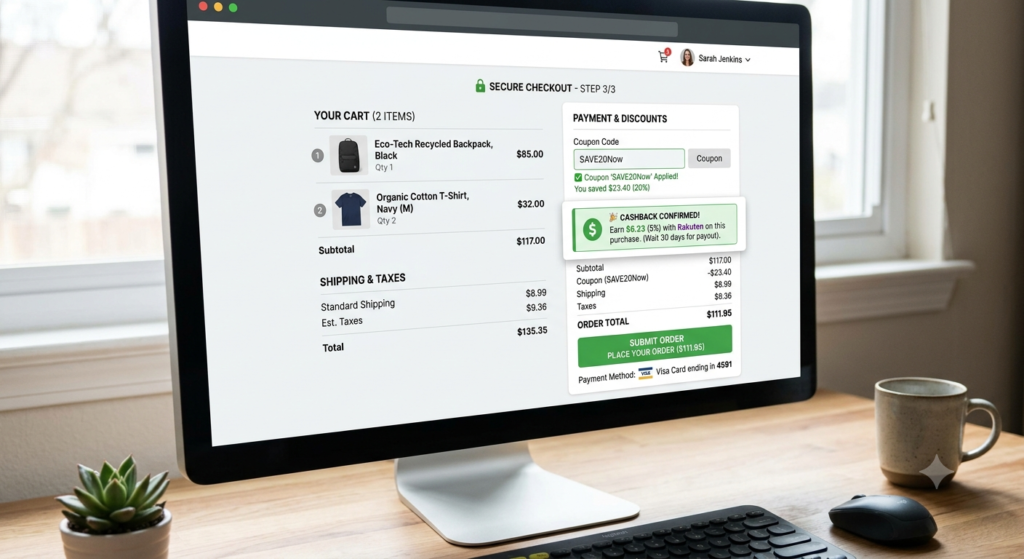
  3. Activate a cashback portal like Rakuten or CouponCabin before completing checkout, since cashback typically will not apply retroactively.
  4. Use a rewards credit card that offers bonus points or cashback in that specific spending category, if you have one and can pay it off in full.
  5. Check for a retailer specific loyalty or email signup discount, which is often an extra 10 to 15 percent that can be combined with the steps above.

One important caveat: some coupon browser extensions can conflict with cashback tracking if both try to redirect your browser at checkout. If a cashback portal does not seem to be tracking correctly, try disabling other shopping extensions temporarily and completing the purchase through the cashback link directly.


Timing Your Purchases Around Major Sales Events

Timing matters almost as much as the tools you use. Retailers concentrate their biggest verified discounts around a handful of recurring events each year.

Amazon Prime Day

In 2026, Amazon moved Prime Day earlier than usual, running the event June 23 through June 26, a four day window compared to the shorter two day events of earlier years. The shift to June, rather than the more traditional July timing, was reportedly done in part to avoid overlapping with other major events on the summer calendar. Amazon also runs a second major event later in the year, often called Prime Big Deal Days, typically in early to mid October, though exact dates are usually confirmed closer to the event.

Back to school season

Late July through early September tends to bring discounts on electronics, dorm and home essentials, and clothing, as retailers compete for back to school and college shoppers.

Black Friday and Cyber Monday

These remain the biggest shopping events of the fourth quarter. Because so many shoppers are watching prices closely during this window, retailers are generally more cautious about inflating “original” prices, but it is still worth checking price history, since not every discount advertised during this period is actually the lowest price of the year.

End of season clearance windows

Apparel, patio furniture, and seasonal goods often see their deepest discounts just after the relevant season ends, rather than during it, since retailers are trying to clear inventory to make room for new stock.

Building a Habit Instead of a One Time Effort

One thing seasoned deal hunters tend to agree on is that verification works best as a habit, not a one off task you only do for big purchases. Once a price tracker or comparison extension is installed, checking it takes a few seconds, and that small bit of friction is often enough to stop an impulse buy that was not actually a good deal. Over the course of a year, those few seconds add up to real savings, especially on categories where prices fluctuate constantly, like electronics, home appliances, and travel.

It also helps to separate wants from needs when deciding whether to buy immediately or wait for a price drop alert. If you genuinely need an item right away, a modest discount today may still be worth taking. If it is something you can wait on, letting a price tracker do the watching for you removes the temptation to check obsessively or talk yourself into a purchase before the price actually drops.

Keep a simple record of what you paid

A lot of shoppers assume they will remember whether a price was actually a good one, but memory is not reliable here, especially with dynamic pricing changing totals from one day to the next. Keeping a simple note, spreadsheet, or even a folder of screenshots for larger purchases makes it easier to spot patterns over time, such as which retailers tend to run genuine sales versus which ones mostly rely on inflated “original” prices.

Do not let sunk cost thinking drive a purchase

If you have spent twenty minutes comparing prices and reading reviews, there can be a temptation to buy simply because of the time already invested, even if the research turned up lukewarm results. It is worth remembering that the goal of verification is to make a better decision, not to justify one you have already talked yourself into.

Red Flags of Online Shopping Scams

Not every “deal” that looks too good to be true is a scam, but a meaningful number are. Consumer protection resources point to several recurring warning signs.

  • A seller insists on payment only through gift cards, wire transfers, cryptocurrency, or a peer to peer payment app rather than a credit card. Legitimate retailers do not require this.
  • The website lacks basic contact information, a return policy, or clear shipping timelines.
  • Prices are dramatically lower than every other retailer for a well known, in demand product, particularly around major sales events when scammers often set up lookalike sites.
  • You are pressured to act immediately, with little ability to research the seller or product first.
  • The checkout page does not use encryption, though keep in mind that having “https” in the URL alone does not guarantee a site is legitimate, since scammers can encrypt fraudulent sites too.

Paying with a credit card rather than a debit card or other payment method generally gives you stronger dispute rights if something goes wrong, since federal law lets you dispute certain unauthorized or incorrect charges within 60 days of your first billing statement showing the error.

A Simple Verified-Deal Shopping Checklist

Here is a condensed routine you can run through before making any non essential purchase over a modest dollar amount.

  • Check the price history using a tracker if one is available for that retailer.
  • Compare the price against at least one other retailer, factoring in shipping.
  • Read reviews across more than one platform, not just the retailer’s own page.
  • Search the product or seller name alongside “complaint” or “scam” to check for red flags.
  • Apply a coupon code and activate any cashback portal before you check out.
  • Pay with a credit card when possible for stronger dispute protection.
  • Confirm the return policy before buying, especially for sale or clearance items, since return windows and rules can differ from full priced purchases.

Frequently Asked Questions

How do I know if an online discount is real?

The most reliable way is to check a price history tool, such as Keepa or CamelCamelCamel for Amazon products, or a price comparison extension for other retailers. If the current “sale” price matches or is close to the item’s typical price over the past few months, the discount may be smaller than advertised.

Are coupon browser extensions safe to use?

Reputable extensions from established companies with transparent privacy policies are generally considered safe, though it is wise to review what permissions you are granting, set site access to “on click” when possible, and avoid extensions with vague ownership or minimal reviews.

Why did some coupon codes stop working during major sales like Black Friday?

Many retailers restrict coupon stacking during peak sales periods, meaning a code that normally works on a full priced item may not apply once a sale discount is already active. This is a common reason coupon extensions show lower success rates during major shopping events.

Can I trust product reviews on retailer websites?

Reviews can still be a useful signal, but they are not infallible. The FTC’s Consumer Review Rule prohibits businesses from buying or posting fake reviews, but enforcement takes time, so it is still worth reading reviews across multiple sources and watching for unusual patterns, such as a sudden burst of very similar five star reviews.

What is the safest way to pay for a deal I found online from an unfamiliar seller?

Credit cards generally offer stronger fraud and dispute protections than debit cards, gift cards, wire transfers, or payment apps. If a seller insists on one of those non credit card payment methods, treat that as a warning sign rather than a normal request.

When are the best times of year to find verified deals?

Major recurring events like Amazon Prime Day, Black Friday, Cyber Monday, back to school season, and end of season clearance windows tend to bring the deepest and most widely verified discounts. That said, it is still worth checking price history even during these events, since not every advertised discount is at its actual lowest point.

Does a lower price always mean a better deal?

Not necessarily. Factor in shipping costs, return policies, and product quality alongside price. An item that is a few dollars cheaper but has a restrictive return window or comes from an unfamiliar seller is not automatically the better choice.

Final Thoughts

Finding a genuinely good deal in 2026 is less about luck and more about having the right habits and tools in place. Price history trackers take the guesswork out of whether a sale is real, comparison tools make sure you are not overpaying at one retailer when another has it cheaper, and a bit of skepticism toward reviews and urgency tactics can save you from a purchase you will regret. None of this requires becoming an expert bargain hunter overnight. Start with one or two tools from this guide, build the habit of checking price history before you buy, and the rest will start to feel automatic.

This article is provided for general informational purposes and reflects publicly available information as of June 2026. Prices, promotions, extension features, and retailer policies change frequently, so always confirm current details directly with the retailer or tool provider before making a purchase decision.

Registration complete !

Show

Reset your password

Please enter your email address. You will receive a link to create a new password.

Check your e-mail for the confirmation link.

Close