
What Are Online Coupons and How Do They Work?
What Are Online Coupons?
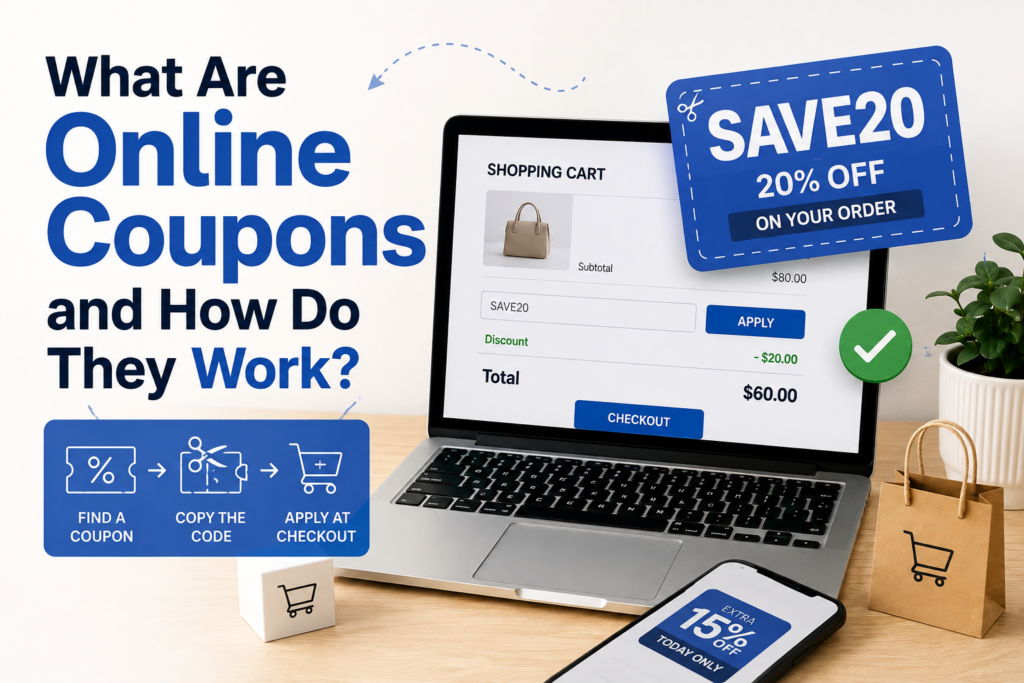
An online coupon, sometimes called a digital coupon, promo code, or discount code, is a voucher that reduces the price of a purchase made through a website or app. Instead of a physical piece of paper, it exists as a code, a link, or an automatic discount that is applied electronically.
Retailers issue online coupons for a lot of reasons. Sometimes it is to clear out extra inventory. Sometimes it is to reward loyal customers, attract first-time buyers, or boost sales during a slow period. Whatever the reason, the mechanism is the same: the retailer sets up a rule in their system, and when that rule is met, the customer pays less.
Unlike the paper coupons your parents or grandparents might have clipped from the newspaper, digital coupons are trackable, easy to update, and can be personalized to a specific shopper. That is part of why so many brands have shifted their marketing budgets toward digital offers instead of print inserts.
Types of Online Coupons You Will Commonly See
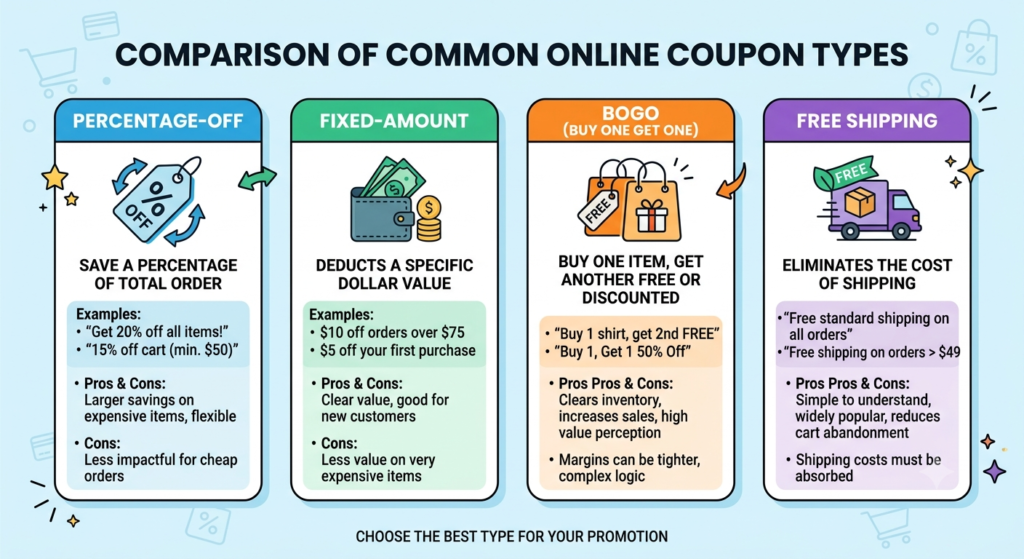
Not all online coupons work the same way. Here are the most common formats you will come across while shopping.
Percentage-off Coupons
These take a set percentage off your total, such as 15% or 25% off. They are consistently one of the most popular coupon formats because the value scales with your purchase, which makes them attractive on larger orders.
Fixed-amount Coupons
This type takes a specific dollar amount off, like $10 off a $50 purchase. These are common for retailers who want to encourage a minimum spend, since the discount only kicks in once you hit a certain threshold.
Buy One, Get One (BOGO) Offers
You buy one item and get a second one free or discounted. This format is especially popular in beauty, apparel, and grocery categories, and it remains one of the more requested coupon types among shoppers.
Free Shipping Codes
Rather than discounting the product itself, these codes waive shipping fees. For many online shoppers, free shipping is just as motivating as a price discount, especially on smaller orders where shipping costs can feel disproportionate.
Cashback and Rebate Offers
Instead of an instant discount, you pay full price and later receive a portion of your money back, either as cash, store credit, or points. Cashback browser extensions and apps have grown quickly in popularity because they work quietly in the background without requiring the shopper to search for a code.
Referral and Loyalty Coupons
These reward you for referring a friend or for being a repeat customer. They tend to build long-term brand loyalty rather than just driving a single purchase.
Automatic or “No Code Needed” Discounts
Some coupons apply themselves the moment you land on a site or add an item to your cart, no code required. Retailers use these when they want a frictionless way to reduce cart abandonment.
First-time Buyer Discounts
These are aimed squarely at new customers as an incentive to complete a first purchase, often shown as a pop-up or offered in exchange for an email signup. Since these codes are typically restricted to accounts that have never ordered before, they usually cannot be reused on future purchases.
Seasonal and Flash Sale Codes
Tied to specific events like Black Friday, back-to-school season, or a brand’s anniversary sale, these codes are usually only valid for a short window. Flash sale coupons in particular tend to create urgency, often lasting just a few hours or a single day, which is meant to push undecided shoppers toward completing a purchase quickly.
How Do Online Coupons Actually Work?
Behind the scenes, an online coupon is really just a rule stored in a retailer’s ecommerce system. Here is the general process from creation to redemption.
1. The Retailer Creates the Offer
A business decides on a promotion, say, 20% off orders over $75, and sets the terms: which products qualify, how long the offer runs, and whether it can be combined with other discounts.
2. A Code or Trigger Is Generated
The system generates a unique code (like SAVE20) or sets up a trigger, such as an automatic discount that appears once a cart reaches a certain value. Some codes are reusable by anyone, while others are single-use and tied to one customer’s email or account.
3. The Coupon Is Distributed
The retailer shares the coupon through email newsletters, social media, affiliate coupon websites, SMS, or in-app notifications. Sometimes a coupon is exclusive to a specific channel, which is why the same brand might have different codes floating around at the same time.
4. The Shopper Applies the Coupon
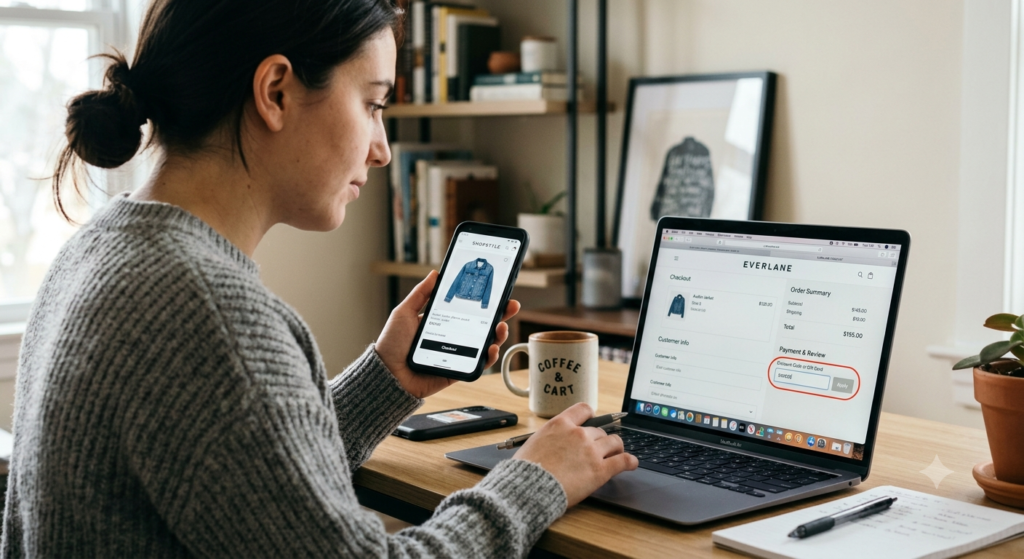
At checkout, the shopper either enters the code manually, clicks an affiliate link that applies it automatically, or uses a browser extension that scans for valid codes and tests them at checkout.
5. The System Validates It
The retailer’s platform checks whether the code is still active, whether the cart meets the minimum requirements, and whether the customer is eligible. If everything checks out, the discount is applied instantly and the new total is shown before payment.
6. The Order Is Processed
Once payment goes through, the discount is recorded in the retailer’s system. This data helps businesses measure how well a promotion performed, which is part of why coupons are also a useful marketing analytics tool, not just a savings mechanism for shoppers.
What Happens on the Technical Side
Most modern ecommerce platforms, whether it is Shopify, WooCommerce, Magento, or a custom-built system, have a built-in discount engine. When a business creates a coupon, they are essentially writing a set of conditions into that engine. Those conditions might include a specific product category, a minimum order value, a date range, a maximum number of total redemptions, or a limit of one use per customer.
When a shopper enters a code, the platform checks the code against its database in real time. If everything lines up, the price adjustment happens instantly and is reflected in the order summary before payment is even submitted. If something does not match, such as an expired date or an ineligible item in the cart, the system will usually return an error message explaining why the code did not apply.
This is also why the same brand can run several coupons at once. A retailer might have one code active for social media followers, another exclusive to email subscribers, and a third reserved for abandoned cart recovery emails, all running in parallel with different rules attached.
Where to Find Legitimate Online Coupons
With so many coupon codes floating around, quality and reliability vary a lot. According to recent consumer research, shoppers most commonly find coupons through search engines, dedicated coupon and deal websites, and mobile apps, with email offers also playing a major role. Here are the most reliable places to look.
- Retailer websites and newsletters: Signing up for a brand’s email list often gets you a welcome discount and access to future sales before the general public.
- Coupon and deal aggregator websites: Sites that collect and verify codes from multiple retailers in one place, often ranked by how recently they were confirmed to work.
- Browser extensions: Tools that automatically search for and test available codes when you reach checkout, saving you the manual searching. (Important: Choose extensions from reputable developers, as some collect browsing data across all websites you visit. Check permissions carefully before installing).
- Cashback and rewards apps: Apps that combine coupon codes with cashback offers, letting you stack savings.
- Retailer apps: Many brands offer app-exclusive discounts to encourage downloads and repeat visits.
- Social media and influencer partnerships: Brands frequently share time-limited codes through Instagram, TikTok, or partnered creators.
- Loyalty programs: Points-based programs that convert into coupons or discounts as you shop more with a brand.
A growing share of shoppers, particularly younger consumers, actively search for a discount code before completing almost any online purchase. That habit has pushed retailers to make sure their official codes are easy to find, since an abandoned cart because a shopper could not locate a valid coupon is a lost sale.
A Quick Comparison of Coupon Sources
| Source | Best For | Thing to Watch For |
|---|---|---|
| Retailer email list | Verified, exclusive offers | Can lead to inbox clutter over time |
| Coupon aggregator sites | Comparing codes across brands quickly | Not all listed codes are still active |
| Browser extensions | Hands-off, automatic testing of codes | Choose well-reviewed, reputable tools only |
| Cashback apps | Stacking savings on top of a coupon | Payout minimums and processing time can vary |
| Retailer’s own app | App-exclusive discounts and early access | Offers may require an active account |
The Real Benefits of Using Online Coupons
For Shoppers
- Direct savings: The most obvious benefit is a lower total at checkout, which adds up meaningfully over a year of regular shopping.
- Encouragement to try new brands: Research suggests that a large share of online shoppers are more willing to try a new business when a coupon is offered, lowering the risk of trying something unfamiliar.
- Better budgeting: Some shoppers use coupons strategically to plan bigger purchases around known sale periods.
- Convenience: With browser extensions and cashback apps, savings can now happen automatically without much extra effort.
For Businesses
- Customer acquisition: A first-purchase discount is one of the most common ways to convert a hesitant visitor into a paying customer.
- Inventory management: Coupons help move excess or seasonal stock without a permanent price cut.
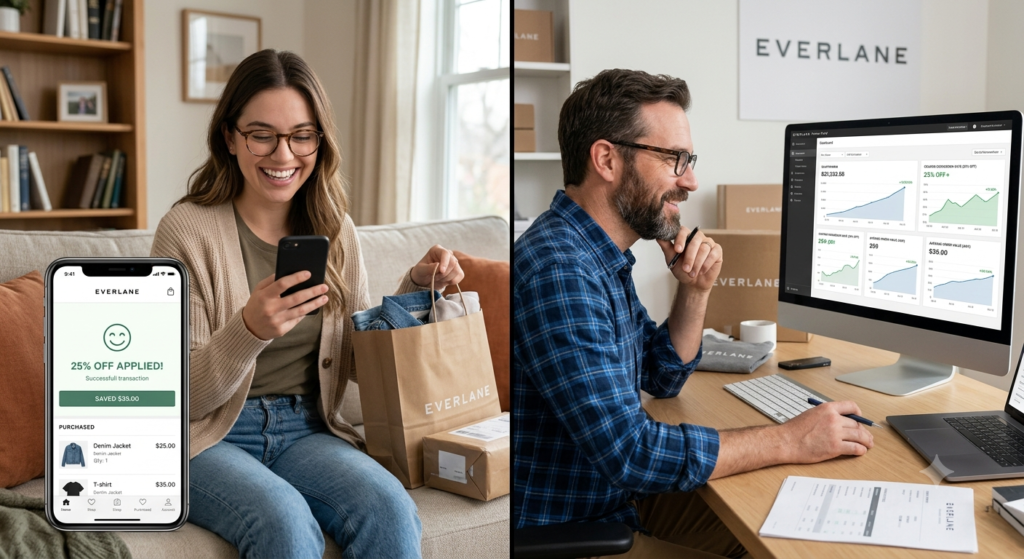
- Data and insights: Coupon redemption data helps businesses understand which offers, products, and channels perform best.
- Loyalty building: Exclusive offers for returning customers can strengthen long-term relationships rather than just driving one-time sales.
How Businesses Decide When to Offer a Coupon
From the outside, coupons can look almost random, a surprise 15% off banner one week and nothing the next. In reality, most retailers plan their discount calendar carefully, balancing the desire to drive sales against the risk of training customers to only buy during a sale.
Common Triggers for a Coupon Campaign
- Slow sales periods: Discounts help maintain revenue during typically quieter shopping months.
- New product launches: A limited-time discount can encourage early adoption and generate initial reviews.
- Cart abandonment: Many retailers send a follow-up coupon by email if a shopper leaves items in their cart without completing checkout.
- Customer win-back campaigns: Businesses often target lapsed customers with a special offer to bring them back.
- Competitive pressure: If a competitor runs a big sale, other brands in the same category sometimes respond with their own promotion to avoid losing market share.
- Seasonal calendar events: Major shopping periods such as end-of-year holidays or back-to-school season are reliably some of the busiest times for coupon activity.
Retailers also closely track something called redemption rate, which is simply the percentage of people who received or saw a coupon and actually used it. Industry data suggests the average digital coupon redemption rate sits at approximately 7%, though this varies by format—mobile coupons can reach 10% or higher compared to under 1% for traditional print coupons. This means the vast majority of coupons that are issued are never actually applied. This is one reason retailers keep experimenting with different formats, timing, and personalization rather than relying on a single type of offer.
Are Online Coupons Safe to Use?
For the most part, yes, as long as you get them from legitimate sources. That said, the popularity of online coupons has also attracted scammers, so it is worth knowing what to watch for.
Common Red Flags
- Coupon codes requiring you to enter sensitive information like a Social Security number or full bank details before you can even see the discount.
- Deals that seem far too good to be true, such as a 90% discount on a popular brand-name product from an unfamiliar website.
- Pop-up ads or emails pushing you to “claim your coupon now” with urgent countdown timers on sites you do not recognize.
- Browser extensions from unverified sources that ask for broad permissions to access all your browsing data.
How to Stay Safe
- Only download coupon apps and browser extensions from official app stores or verified developer pages.
- Check that the checkout page uses a secure connection before entering any payment details.
- Stick to well-known coupon aggregator sites or the retailer’s own official channels when possible.
- Be cautious with codes shared in random text messages or social media comments, since these are sometimes used for phishing.
This guide is intended for general informational purposes. If you ever suspect a coupon site or offer is fraudulent, it is a good idea to report it and avoid entering any personal or financial information.
Online Coupon Trends to Know in 2026
Couponing has changed a lot in just a few years, and the shift toward digital and mobile-first experiences shows no sign of slowing down. Here are some of the trends shaping the space right now.
Mobile Is the Primary Channel
Smartphones have become the main way shoppers both discover and redeem coupons, with 93.5% of digital coupon users now completing redemptions directly through their mobile devices. Many shoppers even use their phone to apply a code while checking out in a physical store, blending online and in-person shopping in a way that was rare just a few years ago.
Personalization Powered by Data
Retailers increasingly use purchase history and browsing behavior to send more relevant, individualized offers instead of blasting the same discount to everyone. This tends to improve redemption rates because the offer actually matches what the shopper was already interested in.
Automatic and “Codeless” Discounts
More retailers are moving toward discounts that apply automatically at checkout, removing the friction of copying and pasting a code. This trend is partly driven by how many shoppers abandon a cart when a promo code field does not work as expected.
Browser Extensions and Cashback Tools Keep Growing
Tools that automatically search for and apply the best available code have become a normal part of the online shopping experience for a large share of shoppers, particularly in the United States. These tools reduce the time spent manually searching for a working code, which industry data suggests can otherwise take several minutes per purchase.
Gen Z and Younger Shoppers Lead Coupon Usage
Younger consumers are especially active couponers, frequently searching for a discount code before completing almost any purchase. This generation has grown up with digital shopping, so checking for a code feels like a default step rather than an extra one.
QR Codes and Scannable Offers
Especially outside the United States, QR-based discount systems are becoming a common bridge between online promotions and in-store redemption, letting shoppers scan a code with their phone camera to unlock a deal.
Global Growth Outside the United States
Couponing is no longer a mostly American habit. Europe has seen strong adoption of digital coupons, particularly in France, Germany, and the UK, largely driven by mobile shopping. Meanwhile, the Asia Pacific region has become one of the fastest-growing coupon markets globally, with the UK alone seeing 1,133% growth in coupon usage and the European Union experiencing over 200% growth . This surge is fueled by rapid ecommerce and digital payment adoption, with similar steady growth across the Middle East and Africa. This global shift means more international retailers are building coupon strategies into their core marketing plans rather than treating discounts as an occasional add-on.
Tips to Get the Most Out of Online Coupons
- Sign up before you shop: Many retailers offer a first-time discount just for joining their email list, so it is worth doing before adding items to your cart.
- Check for stacking rules: Some stores let you combine a coupon with a sale price or loyalty discount, while others do not. Read the fine print before assuming.
- Compare a few sources: A quick check across a coupon aggregator, a cashback app, and the retailer’s own site can turn up different offers.
- Watch expiration dates: Time-limited codes are common, so plan bigger purchases around known sale events when possible.
- Do not let a coupon drive unnecessary spending: Coupons can encourage impulse purchases, so it is worth sticking to what you actually planned to buy.
- Use a dedicated browser extension carefully: These can save time, but stick to well-reviewed, widely used tools rather than obscure ones with poor reviews.
Frequently Asked Questions
What is the difference between a coupon code and an automatic discount?
A coupon code requires you to type in a specific set of letters or numbers at checkout to unlock the discount. An automatic discount applies itself the moment your cart meets the retailer’s conditions, with no code needed.
Do online coupons expire?
Most do. Retailers typically set an expiration date to create urgency and to control how long a promotion runs. Always check the terms attached to a coupon before planning a purchase around it.
Can I use more than one coupon on the same order?
It depends on the retailer’s policy. Some stores allow stacking multiple discounts, while others only permit one coupon per order. This is usually stated in the coupon’s terms and conditions or the checkout page itself.
Are coupon browser extensions safe to install?
Reputable, well-reviewed extensions from official browser stores are generally considered safe for most users. It is a good idea to check reviews, permissions requested, and the developer’s reputation before installing any extension.
Why didn’t my coupon code work?
Common reasons include an expired code, a cart total below the required minimum, the code being restricted to certain products, or the offer being limited to new customers only. Double-check the coupon’s terms if it fails to apply.
Is it better to use a coupon code or a cashback app?
They serve slightly different purposes. A coupon code lowers your price instantly at checkout, while cashback returns a portion of your spending after the purchase. Many shoppers use both together when a retailer allows it.
Do online coupons actually save money, or do they encourage overspending?
Used intentionally, coupons can genuinely reduce what you pay for things you already planned to buy. However, research suggests coupons can also encourage impulse purchases, so it helps to shop with a clear list in mind rather than letting a discount dictate what you buy.
Final Thoughts
Online coupons have evolved from a simple newspaper clipping into a fast, data-driven part of how people shop and how businesses compete for attention. Whether it is a percentage-off code, an automatic checkout discount, or a cashback app working quietly in the background, the underlying idea has not changed much: a small incentive that benefits both the shopper and the business.
As mobile shopping and personalized offers continue to shape the space in 2026, understanding how these coupons work, and how to use them safely, puts you in a much better position to actually save money rather than just chase deals. A little bit of awareness goes a long way toward making online coupons work for you instead of the other way around.
Comments (0)